Community Platform
The self-managed digital home for associations, communities and institutions.
An open-source, white-label web platform with members, events, dues, news and an AI assistant that answers from your own published content. It began in cultural and recreational associations and fits any community or institution: after the deploy the board runs everything from the back office, without a developer.
REFERENCE CLIENT
arcva.pt
STACK
React 19 · TypeScript · Convex
AI
Gemini + multi-provider, keys server-side
LICENSE
MIT · open source
FOUNDING PARTNER
ARCVA · founded 1982
IN PLAIN WORDS
What it changes for an organisation
Most small associations, clubs and community bodies depend on one volunteer with technical skills, and stall the day that person leaves. Community Platform removes the dependency: everything below is edited by the board itself, and every screen is the real product.
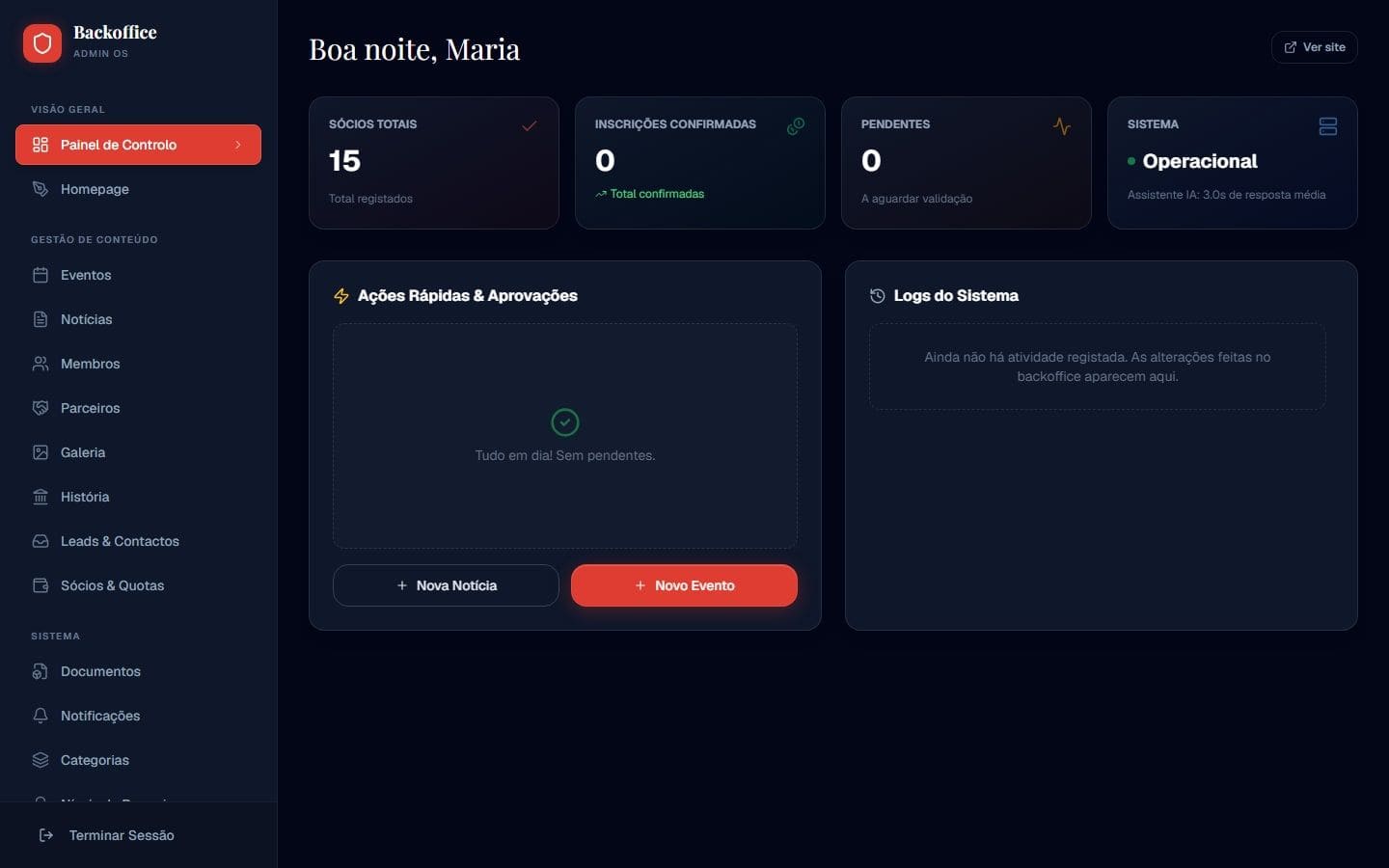
01The board updates the site itself
- The problem
- A poster changes and nothing can be published until the one person who knows the site has time.
- With Community Platform
- A back office with 16 management sections covers events, news, members, galleries, documents and site settings. After the deploy no developer is needed.
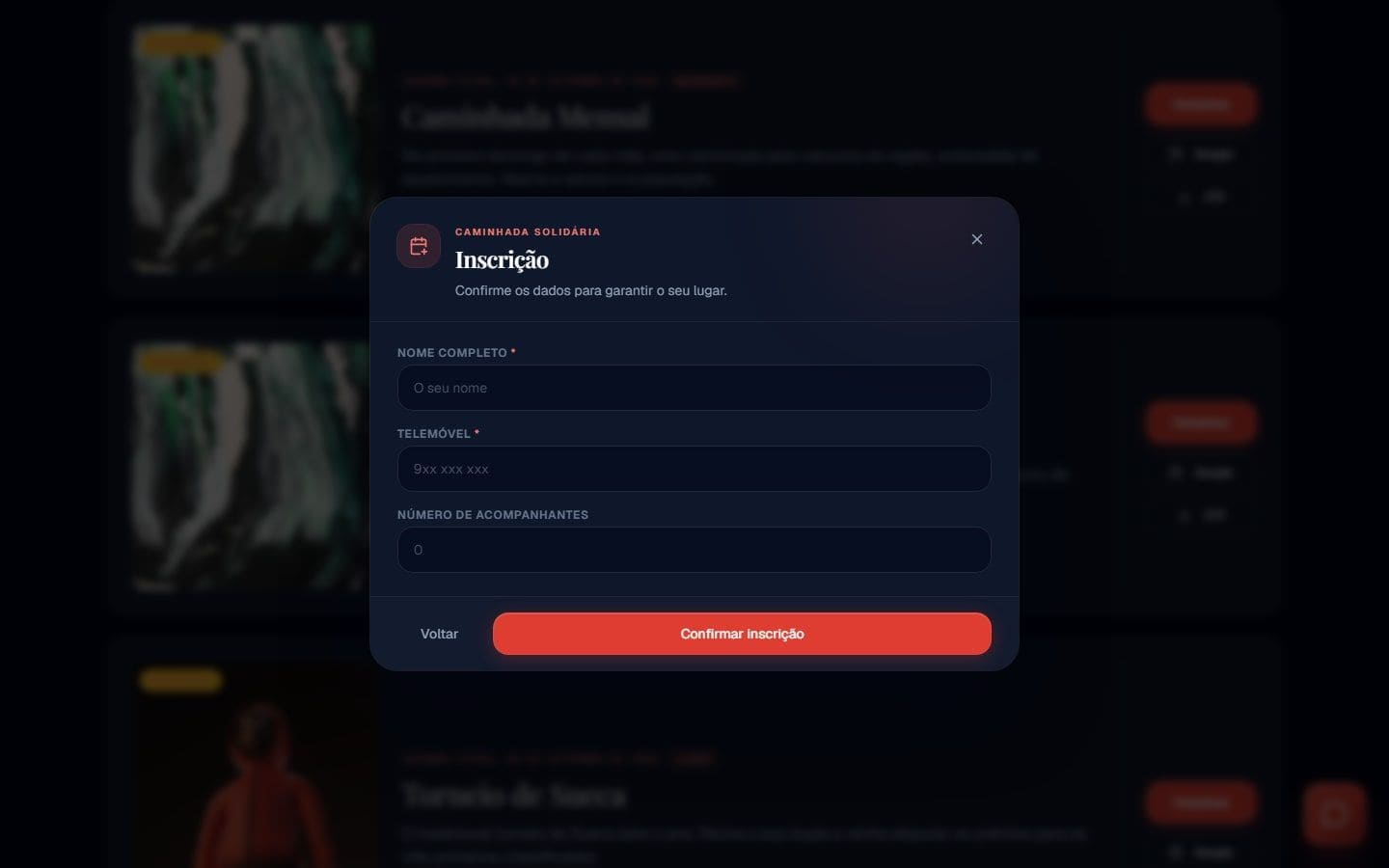
02Everyone registers without phoning anyone
- The problem
- Registrations arrive by phone, message and paper list, and nobody knows the real total until the day before.
- With Community Platform
- Each event carries its own form, per person or per team, open to anyone with the link. The total is live in the back office, the board confirms in one click and each person gets the confirmation by email.
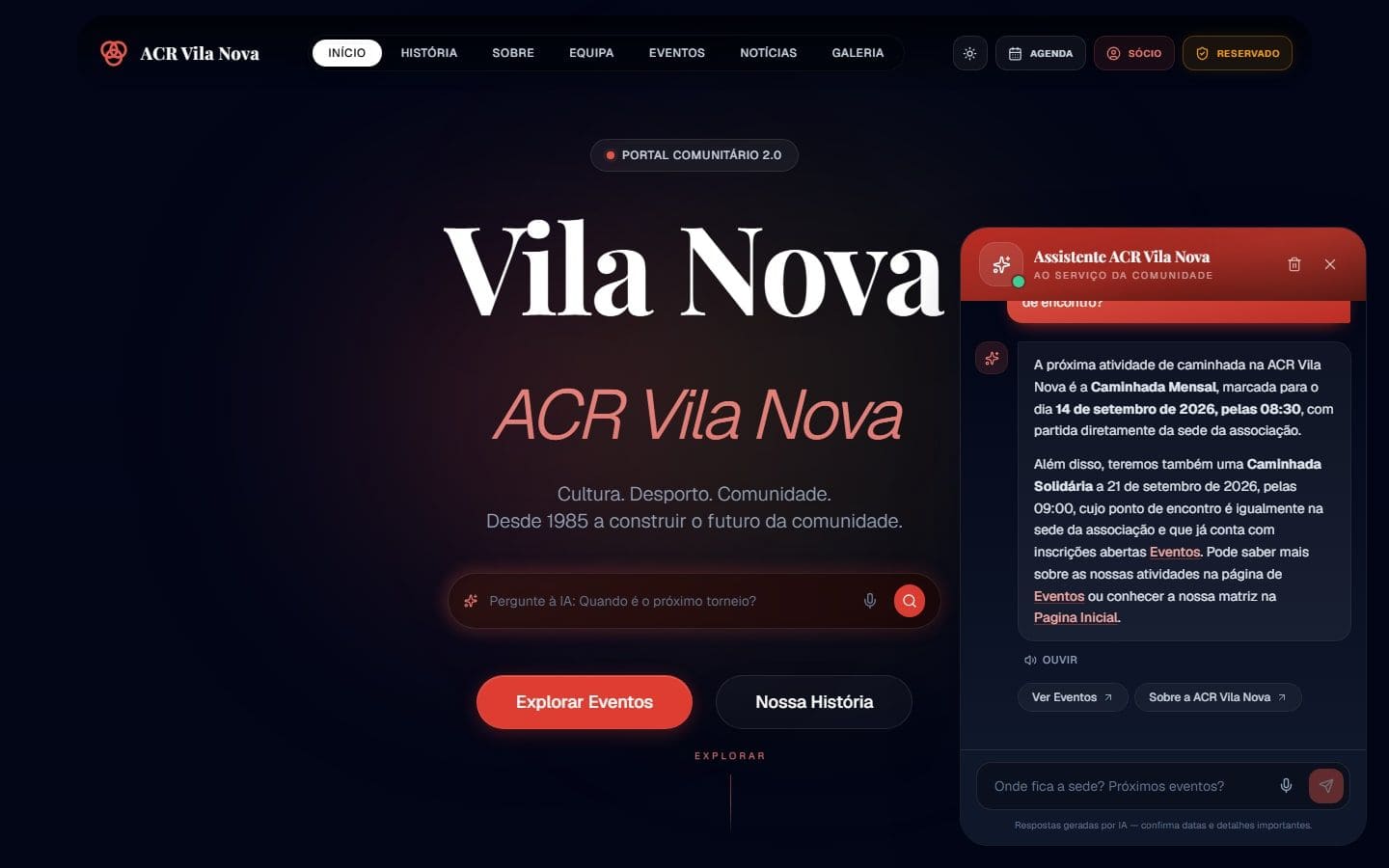
03Visitors ask, the portal answers
- The problem
- The same questions land in the inbox every week: opening hours, where the venue is, when the next event happens.
- With Community Platform
- An AI assistant answers from the association's own published events, team, news and settings, with classification guardrails and an injection filter. It can read the answer aloud in Portuguese.
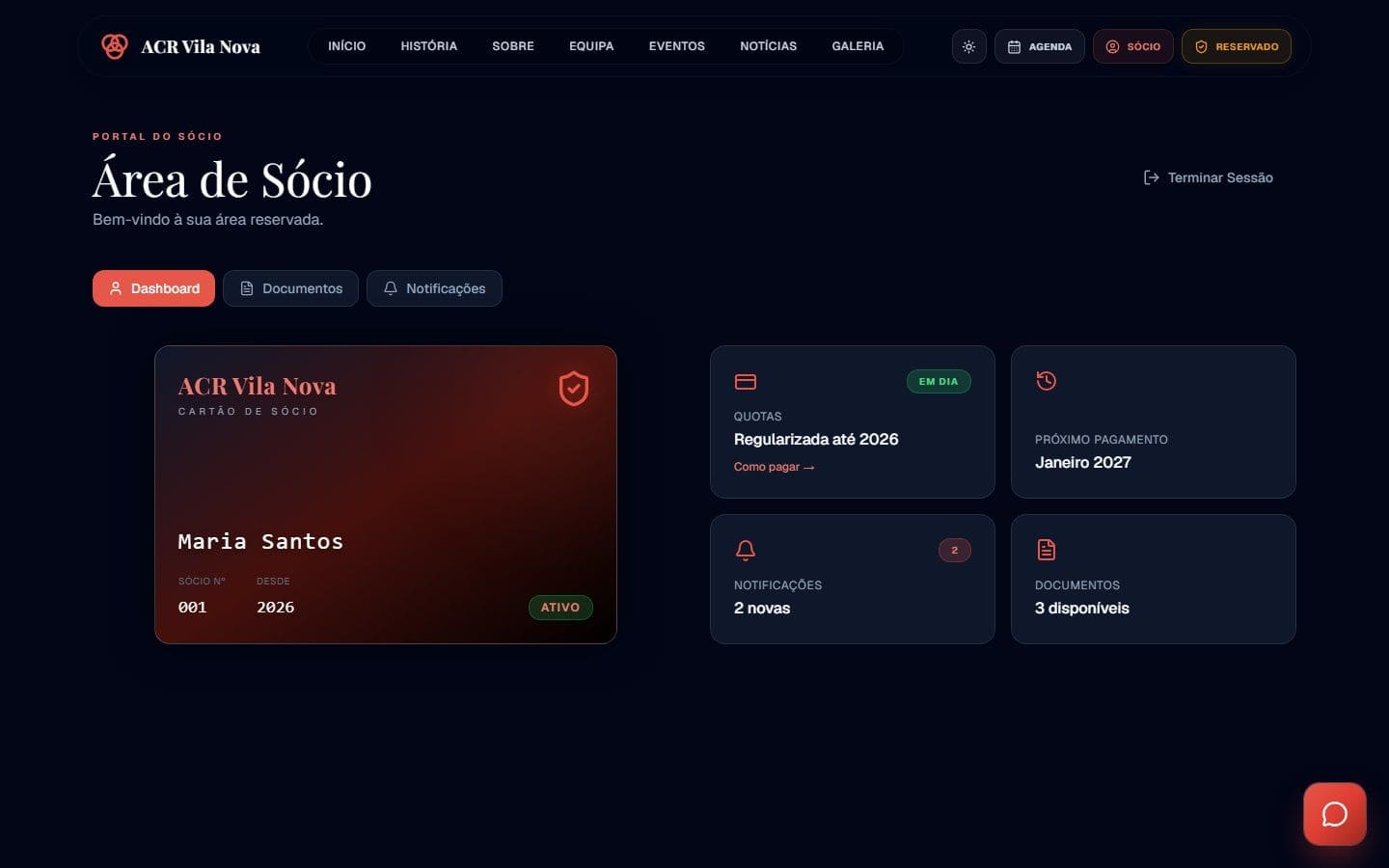
04Dues without spreadsheets
- The problem
- Dues live in a spreadsheet on one computer, and every member has to ask the treasurer whether they are up to date.
- With Community Platform
- Each member signs in to a digital card with a QR code, sees the state of their dues and the payment instructions by MB WAY, IBAN or Multibanco, plus private documents and notifications.


WHAT IT DOES
What the platform does
Pick a capability. Every screen is the real product — the reference instance or the demo association that ships with the code.

Autonomous back office
Nineteen management sections cover the whole portal, from the homepage to email and the AI settings. Every list is the same component, so search, filter chips with counts, sort and mobile cards work the same everywhere.
- 19 management sections
- Search, filters, sort everywhere
- Dark panel, errors in plain words
WHY IT IS DIFFERENT
Built to be handed over
White-label by design
- Identity lives in the database
- Private brand overlay
- Instance repo, automated deploy
Stack · React 19 · TypeScript 5 · Vite 8 · Tailwind CSS · Convex · Google Gemini / OpenRouter / Ollama

01Nothing is hard-coded
Identity, texts, contacts, dues and the AI persona all live in the database. A new association is a matter of settings, not a fork: no file in the repository names a real association.
02No server of your own to patch
The backend is Convex — serverless and realtime, with queries, mutations, storage and crons in the cloud. The frontend is a static build that runs on any web server with SPA fallback.
03Open source, your own AI key
The code is MIT-licensed and public. The AI runs on Google Gemini by default, or on any OpenAI-compatible provider — OpenRouter, or a local model through Ollama, LM Studio or vLLM.
SCREENS
Screenshots
Real screens of the client portal at arcva.pt and of the demo association that ships with the product.
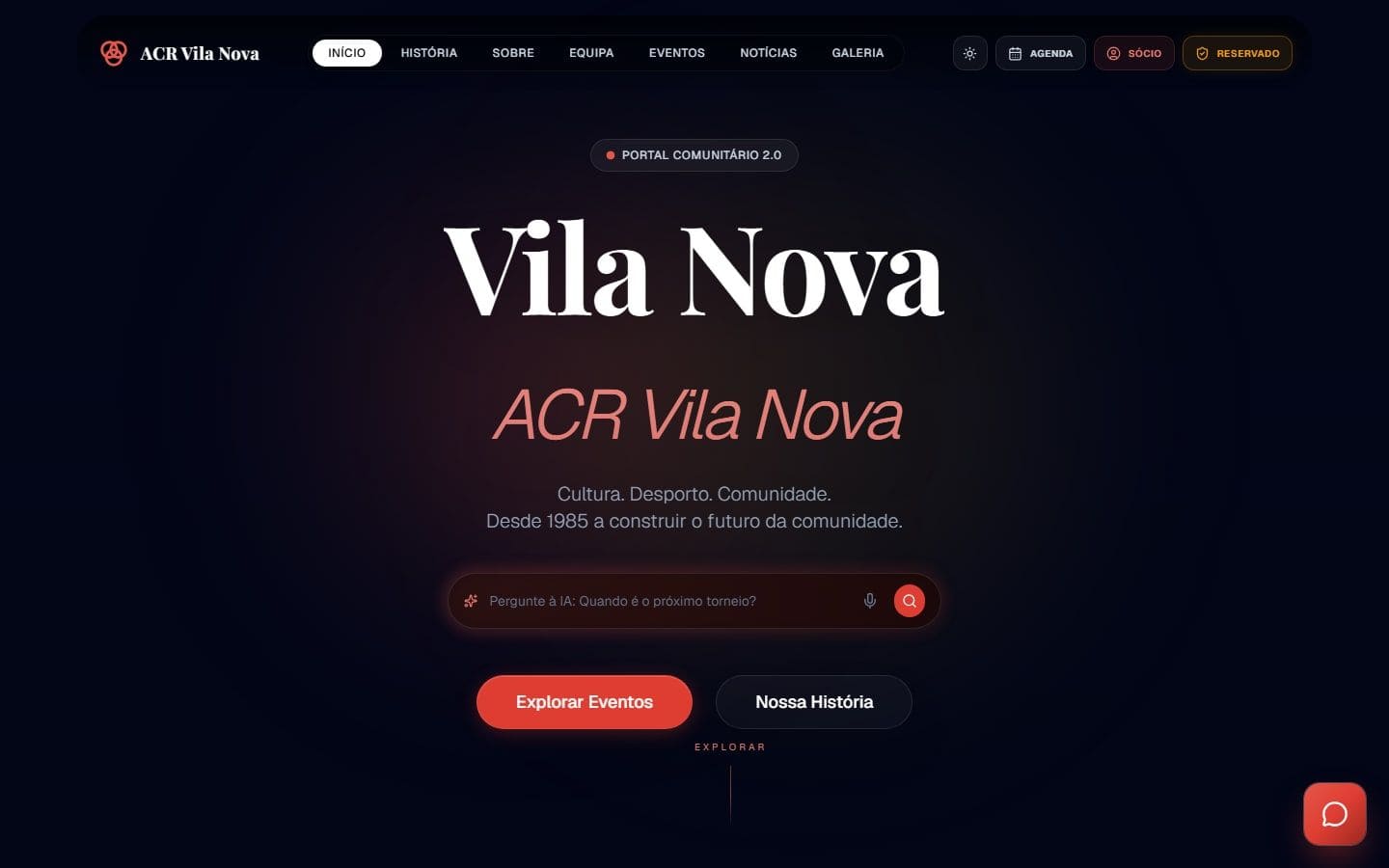
The homepage in the dark theme, with hero, live stats and news, all editable from the back office. 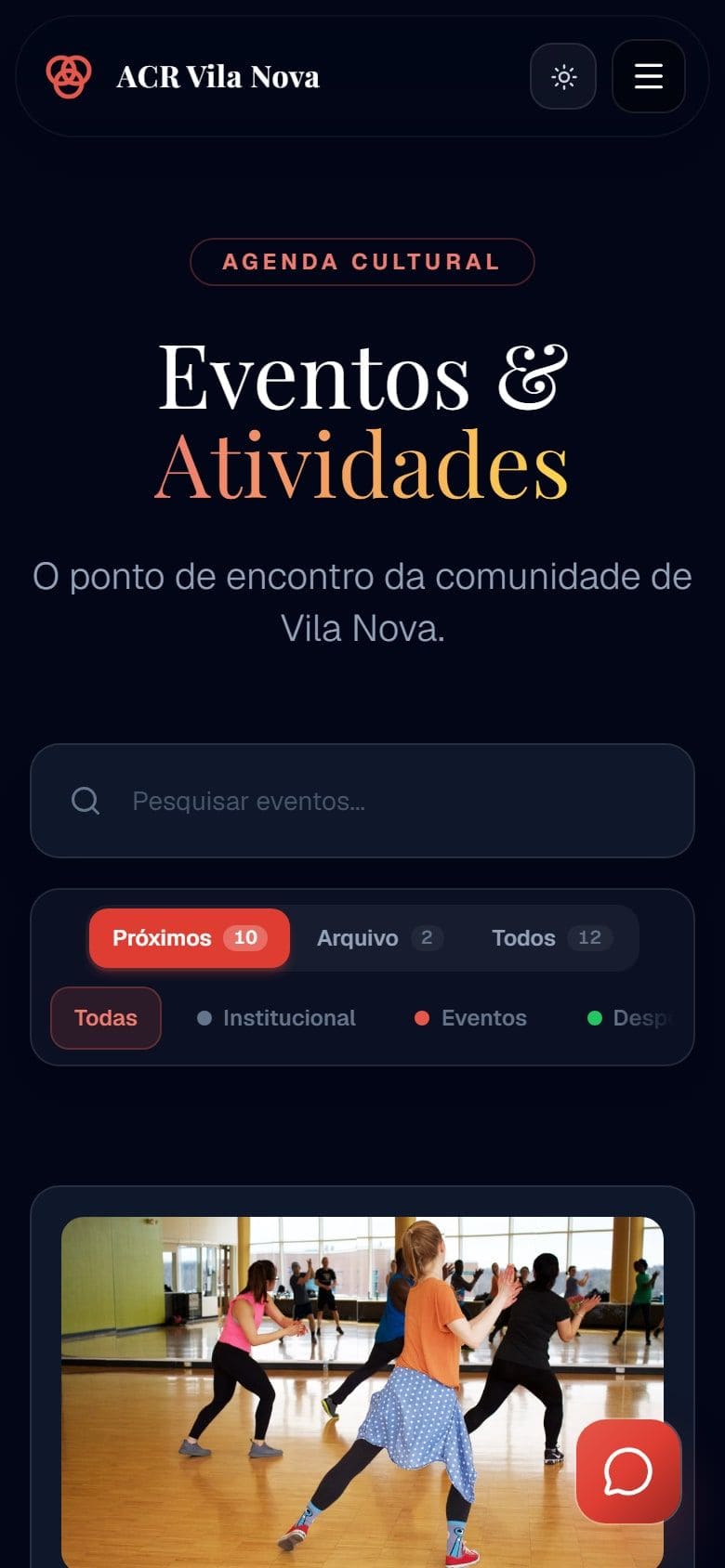
Most members arrive on a phone, and the whole portal is built for that first. 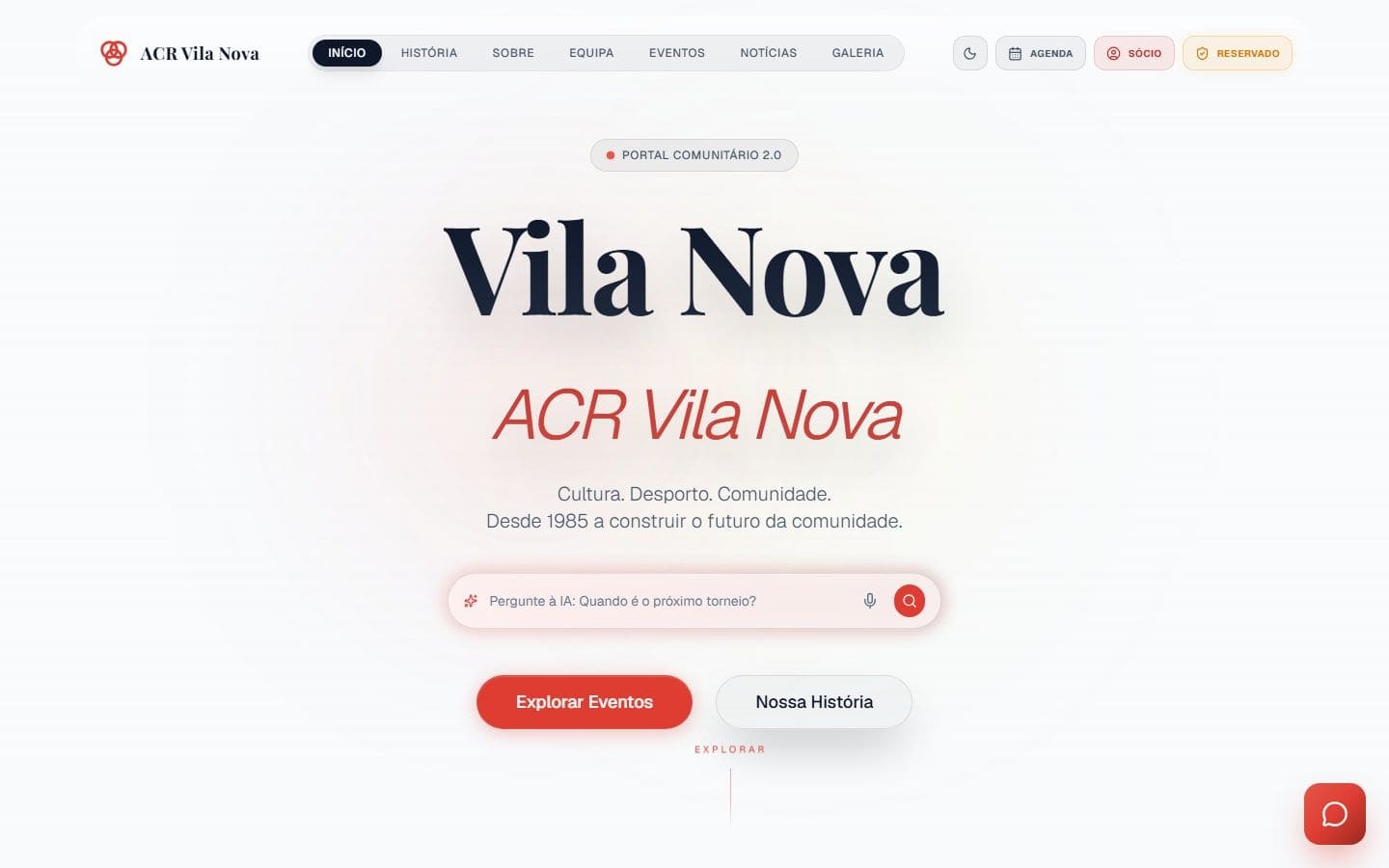
Every public page ships in light and dark, and the visitor chooses. 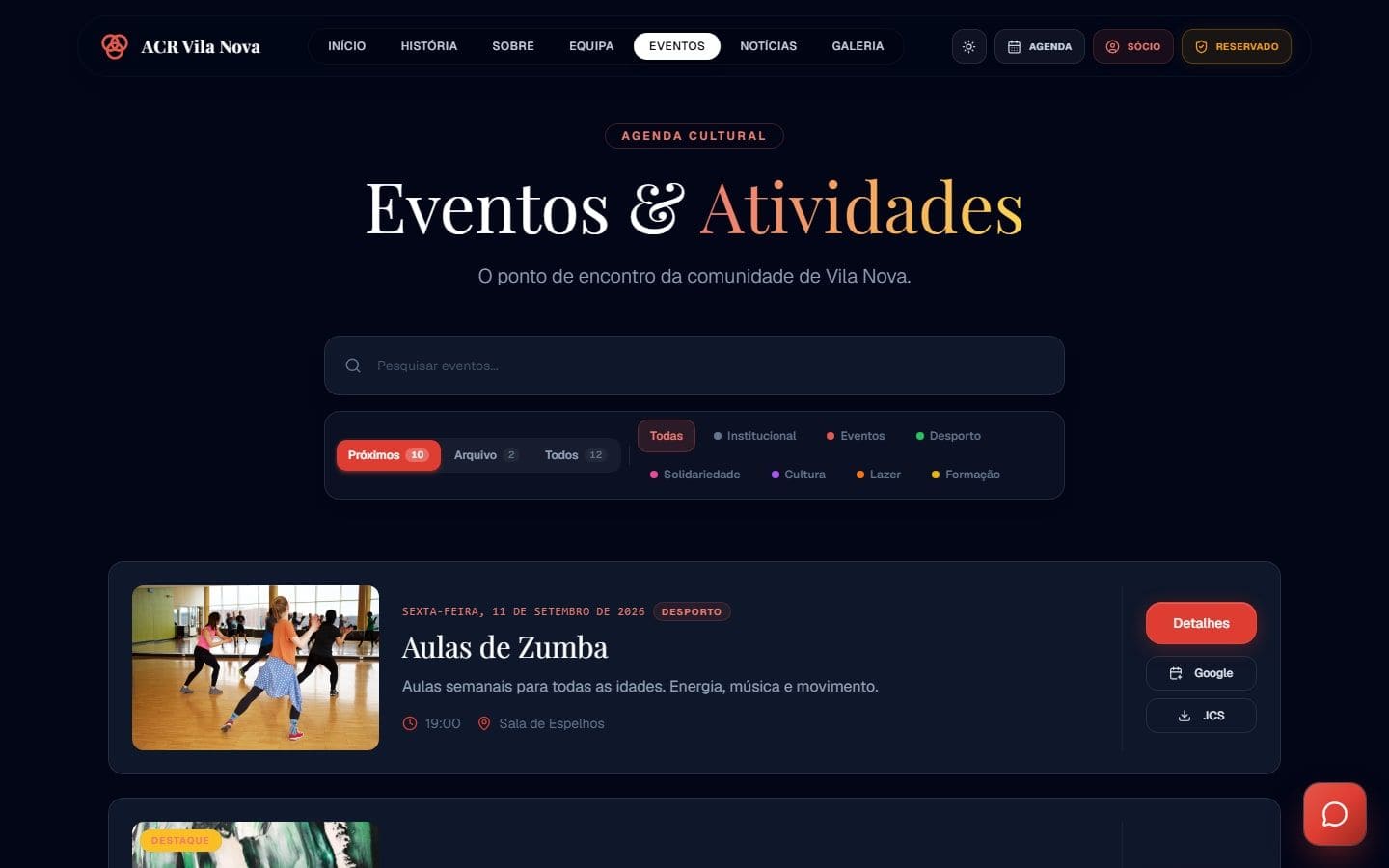
Events with search, filters, sign-up and one click to Google Calendar or ICS. 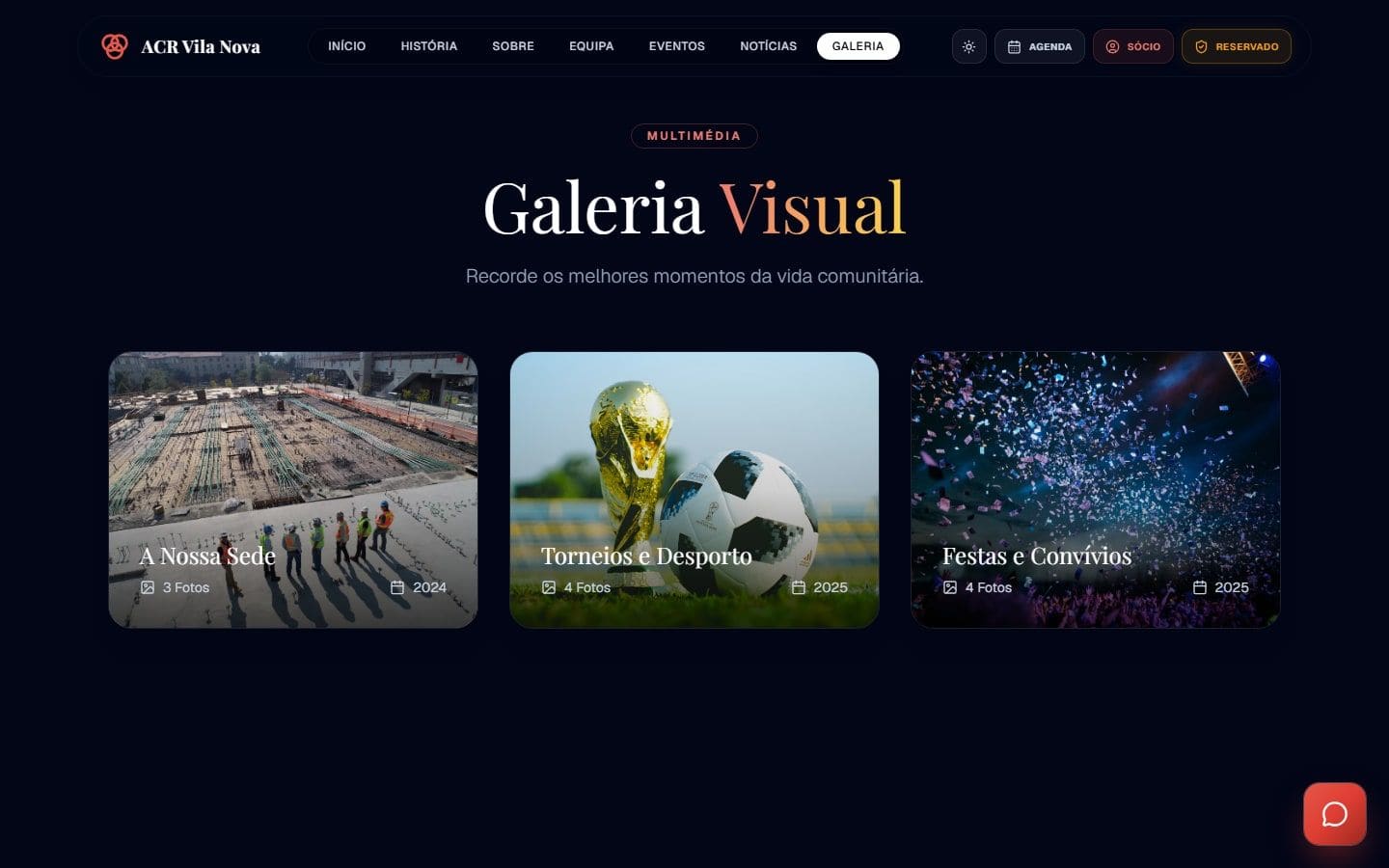
Albums of the association's life, browsable with the keyboard.


PLANS
How to get it
The code is public and MIT-licensed. Your organisation self-hosts it, or BolaLabs hosts and operates it for you.
Self-hosted
Free · MIT
Clone the repository, create a free Convex project, add your own Gemini key and publish the static build on any host. The setup wizard creates the admin account.
RECOMMENDED
Hosting managed by BolaLabs
On request
We deploy the portal, load your identity and content, and keep the instance updated in its own private repository with automated deploys. Your organisation only uses the back office.
Custom work
On request
Content migration from an old site, a new section, a different visual identity, or an integration your organisation depends on. Built on the same open codebase, so nothing gets locked away.
There is no public price list: every organisation is different, and the quote follows the work.
What's next
Planned, not shipped. The roadmap lives in the repository, where priorities can be discussed in the open.
See the roadmap (opens in a new tab)- Sign-in throttling per account and address
- Per-document visibility: board, members, public
- "Forgot my password" by email
- Notices to members by email
- Bounce and complaint tracking for email
Frequently asked questions
What is Community Platform?
Who is it for?
Is arcva.pt the product?
What does it cost?
Which AI is used, and where do the data go?
Can I run it myself, and what do I need?
Next step
A portal your board can run alone
Take the code and deploy it yourself, or tell us about your organisation and we set it up for you. Either way you keep an open-source platform, with your identity and your data.